
In 2016, PBI Kenya developed the Women Human Rights Defenders (WHRD) Toolkit as part of its active efforts to counter violence against women and children. The initiative led to the creation of the WHRD Toolkit Organisers’ Network, composed of fifteen dedicated human rights activists living and working within their communities in Mukuru, Langata, Kibera, Kawangware, and Mathare. These Toolkit Organisers (TOs) were established community leaders advocating for women’s and children’s rights. Through structured collaboration with PBI Kenya, they contributed to the dissemination and ongoing development of the Toolkit while strengthening their own capacity through targeted trainings based on identified community needs. Over time, they built credibility, recognition, and trust within their communities as champions against inequality, abuse, stigma, and impunity—particularly in addressing sexual and gender-based violence (SGBV).
Between 2016 and 2023, this work opened important spaces for dialogue and collaboration among women, youth groups, traditional and religious leaders, institutions, legal actors, and media stakeholders. The journey strengthened community-based responses to SGBV and reinforced the role of grassroots defenders in supporting victims, raising awareness, and advocating both locally and internationally. Following the initial cohort, a second cohort (Cohort 2) was established. PBI Kenya continues to work with members from all cohorts to date. The experienced Toolkit Organisers now also serve as mentors to newer members, ensuring continuity, peer support, and collective resilience within the growing network.
Stories of strength— WHRDs paving the way
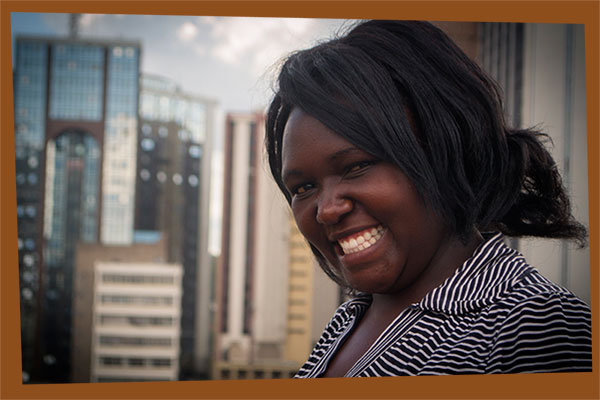
Growing up in Kibera was a challenge. My parents were not well off and my father had an alcohol problem and beat my mother a lot. Because of these experiences, I decided I did not want to raise my own child in the same way and I have been trying my best to raise my girl in a good way. However, being a single mother in Kibera is difficult. Without a good education, it’s not easy for a woman to find a job, to feed your children, to pay the rent. Life in Kibera has been getting harder, everything is getting more expensive.
A couple of my female relatives were raped when I was younger, but then I could not help them because I did not know anything, I had not engaged with human rights yet. I remained silent, but these days, I cannot be silent anymore. And that’s one positive change; women are now more empowered than before.
The stories from my own family are some of the reasons that I became a human rights defender. In 2007, after the elections here in Kenya, my house was broken into because I am Kikuyu. For a long time, I was very bitter with other tribes. Back then, I didn’t understand that if one person wrongs you, it’s n ot the whole community or the whole tribe that is hurting you. Then in 2012, I was invited to a meeting of the Kibera Women for Peace and Fairness organisation, where they talked a lot about peace and forgiveness. That pulled me out of the feeling that I was alone. They have engaged me on different occasions and in trainings, which has made me strong.
There are still women in our community with those grievances in their hearts; who still have that bitterness in their hearts. They were not given the opportunity to talk about their experiences or to understand that if one person hurts you, it’s not the whole community that is to blame. You must forgive so that you can move on.
Women can spread peace or spread hatred. If you want people to fight, you can use women. Women can spread the gospel of hatred very fast. If you want a peaceful community, you can also use women, because women can spread the gospel of peace very easily too. With Kibera Women, we organise sports events and a choir to spread the gospel of peace among women and youth.
Right now, we don’t always have the capacity to follow up on cases. The police may intimidate you, or the victim’s family is paid off by the perpetrator. I had a defilement case in which the perpetrator paid off the family, which made me very bitter. At the end of the day, the one who is suffering is that five year-old girl. She will never forget. Maybe, if her parents had allowed justice to be done, she would have felt better. Other times, we are successful: we had a case where we organised a demonstration from Kibera to the Nairobi Women’s Hospital to force the doctor and police to testify in a rape case. In the end, they did and the perpetrator was sentenced to ten years imprisonment.
Things are slowly changing. We have women vying for seats in the election, we have some women in leadership roles. Before, women’s voices were not heard here. I am a human rights defender, it is my passion. With the Toolkit, we can go far if we combine our ideas and strengths. In many cases, your strength may be my weakness and your weakness may be my strength. Together, we will hopefully create a community where human rights defenders can speak out, we will create a community where people get justice. Because at the end of the day, that is what we are working for: justice.
Kate Wangui
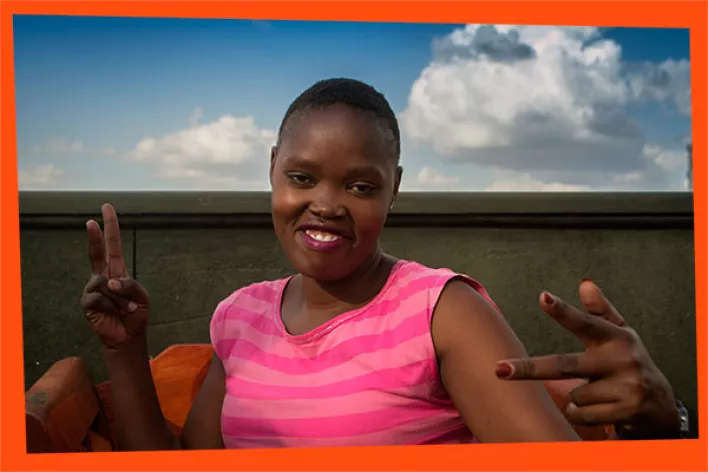
I grew up in Mabatini ward in Mathare, an informal settlement in Nairobi. At home I experienced domestic violence; my dad beat my mum all the time. In this ward, women are not always recognised by men. Women could not even stand for a small position in the community because men believed that women should stay in the kitchen, not stand for a position in our community.
Three years ago, I did not know how people defend other people’s rights. But through different organisations, I learned how to, for example, follow-up on a domestic violence case. In our community, this is a difficult task. Back then, the administration, which is supposed to protect its people, did not want women to report that they had been beaten by their men in their homes. Domestic violence was normalised; like it is something which should happen. This is the reason why I became a human rights defender.
Things have changed through different organisations that have come to Mathare. These organisations offer capacity building sessions where women are taught their rights and to fight for what they believe in. We can now see women taking positions of leadership, even in Chief’s Camp; a woman can now become a chief,[1] compared to before when this position could only be held by men. Things have really changed; women are taking up leadership.
What I am currently working on is supporting women taking up leadership positions because we are heading into the elections period. We campaign for them. We support them. We stand for them. As a result, women’s issues will hopefully be represented in the County Assembly and in the Parliament.
My work as a human rights defender[2] has really had an impact on my family. I have been teaching my father how to solve disputes at home with the information I received during capacity building sessions. This process began five years ago and now my father is different; he does not beat my mum anymore and even if they quarrel they sit down and have a dialogue.
What I find most rewarding about being a human rights defender is seeing my community change. That’s my reward. Seeing women standing up for their rights and standing for positions of leadership, teaching men how to live peacefully in the houses. Through my work as a human rights defender, I hope that more women can become empowered; I want my community, and all women, to learn how to stand up for themselves.
Lilian Awuor Onyango
[1] This is a leadership position within the National Government Administration and Field Services.
[2] Lilian is a member of the Pan-African Grassroots Women Liberation Movement.
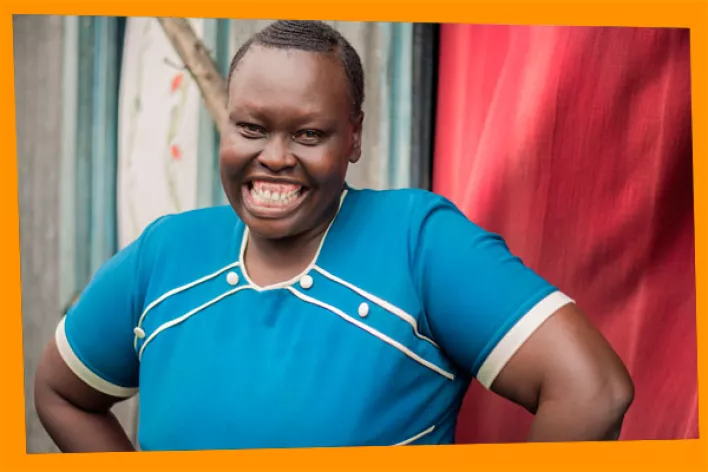
I was born in Kisii in south-western Kenya, but I grew up in Mukuru, one of the biggest slums in Nairobi. I am an only child and my mother passed away before I reached the age of 10.
We face many challenges here. Life is more expensive than it used to be. The road conditions are bad, which makes it difficult for people to walk in the street during rainy season. A lot of children do not have the possibility to go to school. There are few work opportunities for those who manage to finish their secondary education. Moreover, sexual violence makes it difficult for people, especially women, to walk around this area.
I have struggled to find work since I finished high school. I have done a lot of interviews, but it happens that you have to pay a bribe to get a job. This is why I decided to have a small business of my own and become a first aid volunteer for my community.
Being involved in community work has enabled me to participate in trainings and has increased my knowledge and skills to help others. With my fellow volunteer colleagues at St John’s Ambulance, we teach people about gender-based violence. We organise forums where we mobilize the members of the community and make them aware of their rights. We empower people by advising and encouraging them to be active in doing good. We might not be able to provide financial support, but we offer knowledge.
What I find the most challenging about being a volunteer woman human rights defender (WHRD) is that I am not always taken seriously. Some people believe that we are not honest with them, because we are not getting paid. Most of the time, I use my own money to follow up on a case, even if it means I have to skip breakfast or lunch. I also prefer working during day time, because I fear that bad things could happen to me at night. Human rights activists receive threats to stop following up on a case. These threats can come from people who have been bribed by the perpetrator. Despite these challenges, I stand firmly.
I was very happy when I heard about the Toolkit for WHRDs. When women want to become leaders, they are often told by men that they cannot. We are told that we have to follow the traditions. But I say no, we should speak out! What I hope to achieve as a Toolkit Organiser is to increase my knowledge and skills and to know how to better handle specific cases.
In Mukuru, many people know me and tell me I am a hardworking woman. I also get support from my family, especially from my daughter who tells me how proud she is of me. This makes me feel good about myself.
Jackline Kwamboka
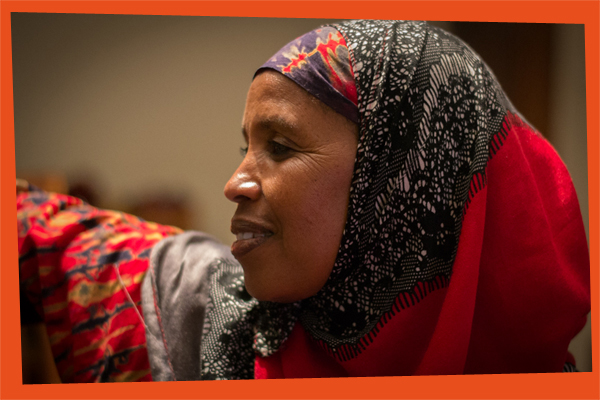
“I came to Mathare when I was six. I remember very clearly that during those times, there was no mistrust between the different communities. I would play with all my neighbours whether they were Kikuyu, Luo, or Borana. They were like my siblings, and their parents were like my parents. But this comradery and positive community spirit started to change during my early teens. The community became divided and the frequency of violence increased substantially. I think that politicians are partly responsible for this, because they created mistrust between the communities that did not exist prior to that.
The reason I became a human rights defender and a voice for girls and women is that of my own painful experience. I am a survivor of female genital mutilation and early marriage. I got married at the age of 13 to a man aged 63. When I was 14, I gave birth to my first set of twins who were taken away from me without giving me the chance to hold them. I was told by my mother-in-law that I was too young (to know how) to take care of them. I gave birth to two other sets of twins when I was 15 and 16 and the same thing happened. I began to experience very high levels of stress and distress. It was very painful. I was a childless mother, but not because my children had died.
I had had enough of going through so much oppression, so I decided to go to court. After a long legal battle over the custody of my children, I gained my rights as a parent and I am happy to say that I still have them in my life. I have been very open to my children about my experiences. They are extremely loving and supportive of my work, and I am very proud that my youngest son, whom I had with a man I loved, is following in my footsteps.
Soon after that, I divorced my husband. My parents rejected me because in our culture, I belonged to my husband. Thankfully, my neighbour Wakerema helped us out. She found my children and me a place to stay. We did not have much, just that small mud house and cartons to sleep on, but we had each other. Wakerema taught me how to make changa’a [a traditional home-brewed spirit] which at the time was illegal in Kenya, but it was my only way to survive. I made and sold changa’a for nine years. This enabled me to pay the rent and provide food for my family. When I had saved up enough money, I decided to sell second hand clothes instead.
Already back then, when I would hear that a young girl was being married off to a man against her will, or any time I would hear about female genital mutilation, I would intervene. I would speak to these girls and explain to them that this is not something which is supposed to be happening to them. I would disrupt weddings and scream that this is not acceptable. I would go to the chief’s camp or police station. The elders were very angry with me, telling me that of all people (being married, divorced, having taken my children away from my husband, and selling alcohol) I had no right to speak out. I was an outcast on every front, having no rights and no say in the community. But I never gave up.
For me, one of the big challenges of following up on cases of gender-based or sexual violence is working with the police. For instance, I feel that rape cases are not always taken seriously. When an alleged aggressor is not arrested after I report the case, then not only does it become a bigger problem for the victim, but also for me because I also get exposed and start fearing for my own life.
Through my own experiences of oppression (being a victim of female genital mutilation and an early and loveless marriage, having an oppressive mother-in-law, facing a community that doesn’t want to understand my problems and the economic hardship that came with raising my children as a single mother), I became passionate about human rights defence work. I feel deeply about justice and think that every single human being, irrespective of their age, community, class or situation they find themselves in, should be entitled to the same rights.
In 2015, I was one of the winners of the Mathare Heroes Award in recognition for my efforts as a human rights activist. When in December 2016, I won the ‘Human Rights Defender of the Year’ award at the Dutch Ambassador’s residence, I thought to myself: “Why me? I can’t even read or write! Who am I, compared to all the other nominated people?” But all the words of encouragement I received made me accept that this is something that I am meant to do. Moreover, with these prizes, my community, including the elders, have formally accepted me.
I have always had challenges in my life, but they have never stopped me from achieving my goals. I do not see them as a setback, but rather as a normal process of this struggle and I remain very passionate about my work. All the support I have received from my family and human rights defenders comrades, like Mathare Social Justice Centre[1], the Bunges[2] and Peace Brigades International, to name but a few, has been fundamental in boosting my strength and has given me the energy to continue helping people. The fact that my story has crossed borders and that people from different places of the world have shown so much appreciation for my work, has also given me a lot of strength to continue.
What I want is to let as many people know about their rights and what it means to be oppressed. It would be very important to equip women and men with knowledge on how to act immediately when things happen. I believe that the WHRD Toolkit will empower us, but also the people we work with and those we seek justice for.”
[1] Rahma Wako is an active member of MSJC, working on women’s, youth’s and reproductive rights
[2] Bunge la Mwananchi (BLM) and Bunge la Wamama (BLW) are social movements that engage citizens in public discussion and demand social equality and participatory democracy, certain members of BLM and BLW are actively engaged in human rights work.
Rahma Wako
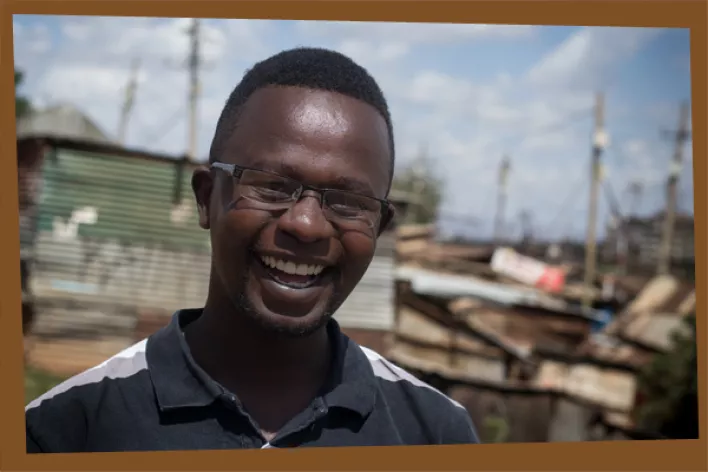
Growing up in Kibera is challenging, especially as a young boy. 99% of the guys I grew up with are dead – mainly because of crime. A lot of young men do drugs, or get involved in the world of drugs. And basically, once you get involved with drugs you have very little choice but to venture into crime. Nevertheless, it is still a choice. Many people do drugs because of peer pressure – and there is a lot of peer pressure where I come from. But still, if you really don’t want to, it’s ok. Ultimately, no one will force you to do it.
My father died when I was very young so my mother was the one who took care of us. It was so tough. We lived in a village called Gatwekera and, at that time, it was a very dangerous village. My mother was a nurse. Sometimes young men in the neighbourhood would be shot and would come to my mother, asking her to remove the bullets and to tend to their wounds. I used to see my mother doing that. She really did a lot of things to change Kibera. My mother died but she has been a great inspiration, so you could say I am following in my mother’s footsteps. She is one of the founders of Carolina for Kibera; a local NGO that develops local leaders, catalyses positive change and alleviates poverty through various programmes. Now, I can proudly say that I do communications work for Carolina.
One thing that is unique about Kibera is that we are always united. If you have a problem, everybody from the community will come to help you. I think that Kibera is more popular with NGOs than other slums because it is the second biggest slum in Africa and it has a lot of problems. Kibera has changed a lot because of the number of NGOs that work here. They really do a good job. Some talk to youths, some mentor youths, and some set up support groups. Just seeing what the youths are going through, I feel that I am in a position to change that. I do not like young people being shot at and dying in the streets, or ladies being molested. It’s not right.
I went to primary and secondary school in Ukambani. After high school I studied community development at a college in town. Then I did a film production course. The knowledge I gained has helped me to cover stories of human rights violations. Sometimes I partner with women who are working as community health workers and they call me when something happens in the community. I share these stories on YouTube, for example. I think that these tools can be used for social change. Mostly when you want to do a story in a slum, it’s tricky, even when people know you. They see you with your camera and will want to take it from you. That is the most challenging. So far though, I am lucky, I have never been threatened.
I think the situation in Kibera might get violent during the upcoming elections, because mostly the violence in Nairobi starts in Kibera. The likelihood is high that if the opposition leader does not win, there will be fighting. During protests the police are known to beat people and rape women – that scares me. However, I believe we can educate people through community forums. Mostly the youths are the ones being used by the politicians; they are given 200 KES (equivalent to 2 US dollars) to go riot. If someone can tell them that the 200 KES is not worth risking their lives, then things can change.
As a Toolkit Organiser I feel I am given the right platform to support the rights of women and children in Kibera. It will not cost me anything because my background is community development and it is my responsibility to change my community. In the next few months I hope to see change, and I hope that there will be more support from the government for human rights defenders. What makes me happy is when I do something to change or help someone; when I see results. And yes, I do see results.
Kevin Otieno Odongo
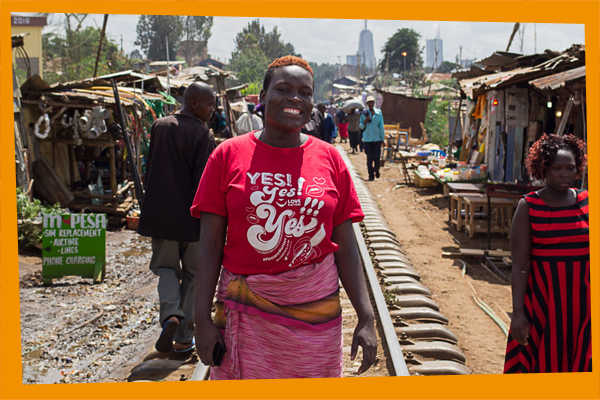
I was born in Kibera and I grew up in Kibera; growing up here was both a privilege and a struggle. Life is difficult in Kibera and we live in poverty here, but this place makes a woman strong and I believe that I am strong today because I grew up in Kibera.
I had sex for the first time through defilement and at that time I was six years old and it was a very painful experience for me. I think that such situations make women very strong. At the end of the day, it was a challenge to me; a challenge that has brought so many successes today. Violence against women is very common in Kibera and many people have normalised it. So many women experience violence and they do not talk about it because they think it is normal, especially women experiencing violence in their relationships.
When I was 16 years old I was gang raped. These people raped me and then they were speaking about it in the society and by that time I was in puberty – I was a girl, I was naïve and then they were telling everyone and they were doing that for fun. That was the sad part, they were doing it for fun, and they did not know that they were causing damage. When I realised that I was pregnant, I hid it and went for an unsafe abortion; I did not share my story, not even with my best friend. It was more than 20 years after the first time I got raped that I told my family about it. I told my father, and my family, that the reason I am doing a Bachelor’s in Gender, Women and Development Studies is because of my experience when I was a child. I wanted my father to know it, as much as it is not supposed to be said in this society. I wanted him to know because he is a polygamist and he has young children, who come from where I came from, and I do not want them to experience the same thing I did. For violence to reduce, you must stand up very strongly, without shaking, and speak out against it. I found the strength to forgive the gang that raped me in order to feel free. It was not easy to pick up my life again but I am trying to make it work.
I got involved in human rights work because of my experiences and because of the vision I have for the women and the passion I have for human rights. I remember when I was a child I would say I wanted to be a lawyer and, although I am not a professional lawyer, sometimes I feel that I am in that law industry because I protect a lot of rights, I stand up for a lot of people. Kibera is changing slowly, women like me can share their experiences and, today, women can report cases and some women can walk out of violent relationships. It is not a boom change, it is a slight change – you can observe it. And I am really happy about it.
I have dedicated myself to my community because I am a mother, and my daughters are growing up in a community, Olympic, similar to the one I grew up in, Kismudogo, and I am not going to live forever so I want to leave a legacy for my children. I want them to be able to proudly say “My mother changed this to this”. My eldest daughter is eight and I have shared my experiences with her; we sit down, have a girl-to-girl talk, we speak about all these issues and how she can protect herself. Soon we will talk about puberty so that she can understand properly what she is going through.
One of the frustrations in my human rights work is the state of the Kenyan system; our system is very poor. Today a woman gets defiled and tomorrow she will see the perpetrator back on the streets. We need to work on both strengthening the system and preventative measures. I had a recent case of sexual violence where the case worker, who was supposed to be getting justice for the victim, took a bribe from the perpetrator. But nobody wants to speak about it because the case worker is a man and has the reputation of being a vigorous person.
Often, my human rights work is difficult, but I believe in human beings and I am well connected; when I feel a case is heavy for me I look for advice from older women. They encourage and inspire me. I have so many friends, when you come here in the evening you would think it is a parliament because there are so many people sitting around.
I do this work for the love of my society; I love working with my society and my community at large. One of the areas that we need to address is the issue of data and reporting – we have not taught our women how to report abuses, how to put everything down in writing. We need to teach them that even if they do not want to take the perpetrator to jail, it is still important to report it so that we can understand the scale of violence against women. Increasing the number of women reporting cases is one of my goals for the coming year and another is how we engage men on the topic of violence against women. We need to sit with men, to speak with men, especially young men because they will be the husbands and fathers in a few years. We need to make sure the men are aware of what the Constitution says about this issue. Many people do not know what the Constitution says and if what they are doing is against it. If we engage not only with women on the topic of gender based violence but with all of society, and give men the opportunity to talk about it themselves, then we are going to prevent a lot of issues in the future.
Editar Ochieng
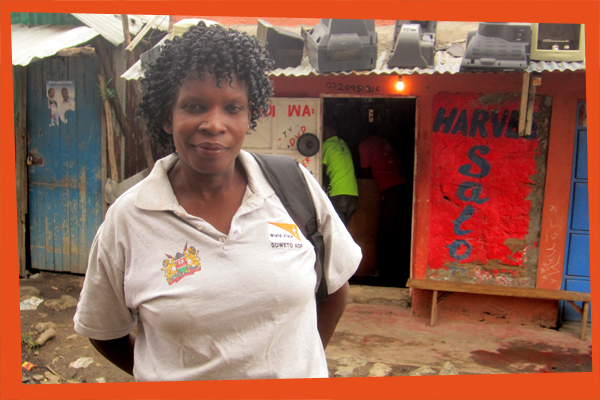
I was born in Nairobi, after which we moved up country where I grew up. I took some jobs there working in first aid rooms and then I came to Mukuru twenty years ago. I became a Human Rights Defender when I worked in a clinic in Mukuru. However, in 2007, they closed the clinic because of the post-election violence. After staying home for two years I decided to work as a volunteer at the community health centre. It was better for me to be there than to stay in the house. My family is in Mukuru, they think a job is a job and they are supporting me.
Young girls growing up here face many challenges, some of them are orphans, some don’t go to school, some have been raped, some of them are doing so much home labour. Over the last 20 years, Mukuru is changing for the better. We go from house to house to ask mothers to send their children to school. I find it most rewarding and enjoy talking to people because you can really make things better.
Since I am a community leader, some people understand you, but some people cannot understand you. As a woman HRD, there are so many challenges. In the community, there are gangsters. Once they know you are a gender defender, they want to kill you so that they can remove the problem. They don’t like people changing others. It is very difficult.
I joined the toolkit organisers programme because I like to meet new people and I like to make friends. I like empowering them when I have a health talk, it is my work, like when I talk about gender based violence. For the toolkit organisers, if I go to Kibera I make friends there, if I go to Mathare, I make friends there, and we can all learn from each other.
Grace Papa
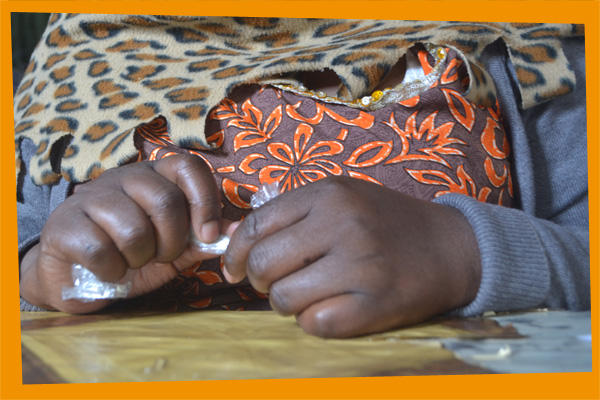
I was born in Kibera and then I moved up country with my family. When I came back to Nairobi, I ran a community-based organisation (CBO) in Dandora to empower women on their human rights, in particular gender-based violence and defilement cases. We also taught entrepreneurship because we used to build women’s skills so they can survive on their own.
I was once in an abusive marriage. The root cause was financial. I used to lie down on my bed asking myself ‘how many young mothers do we have who are going through what I am going through and cannot speak for themselves?’ Poverty and domestic violence pushes most of the girls into prostitution and children to drop out of school.
Since I established the CBO in Dandora, I started speaking with the young girls and they would share with me all these stories. Many of these girls and young women would be married and they would not realise their husband was a criminal until they would find out he was shot dead during a crime, like a bank robbery. In March 2007, I wrote an article about a young woman who was the wife of a wanted man and who was denied access to hospital care when she was in labour because of her husband. In the article I asked ‘how many women don’t know who their husband is?’ and I mobilised over four hundred young women to share their stories.
After that article, I tried to get elected for a political position as a MCA so that I could fight for these girls. I didn’t get it because it was not easy as I am a woman. My opponent tried to use what I had done with empowering women against me and said that if people elected me I would not listen to men because I advocate for the rights of women and girls.
I had about seven men jailed because of incest and defilement cases. I would ask the police after an extrajudicial killing ‘why are you killing these young men?’. It was very heavy for me because I had all of them against me: the police, the perpetrators and the men committing domestic violence. Sometimes, you have taken a report on defilement to the police, the perpetrator has been brought in and booked, tomorrow you go to the police station and you find the perpetrator has left and that the case is already compromised. When the perpetrator is outside, what happens with your security? People attacked my office in Dandora and a vehicle with no number plate would follow me at night. I was held at gunpoint and on the same day, seven young men seriously battered my son.
I was born an activist and I am a role model. Women need to have something by themselves so that they are not vulnerable. As a changemaker and a peacebuilder, I always look around at these problems in my community – politically and socially, because there are people today who don’t believe in women leadership. Women need to be in power because women are powerful and very bold.
Asha Ali Hussein
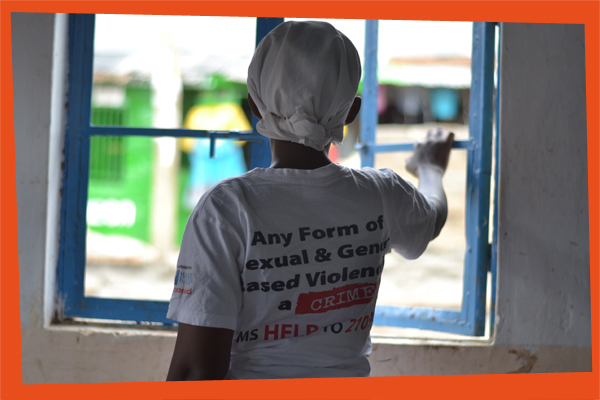
When my husband had a work accident in 2007 and passed away, my brothers-in-law told me I had to move from Mukuru to eastern Kenya, where I had to stand all day long with my little child on my back, grinding maize for customers to get flour. My little child developed a health problem but my father-in-law would not let me take her to the hospital. My cousin sent me a bus fare and I went back to Nairobi so I could access medication for my child. My father-in-law then wrote a letter to the company my husband had worked for requesting that they compensate him and not me. I endured sorrow and pain and so it came for me to stand as an activist and as a human rights defender. Up to now, I do not like to see anybody being assaulted or being put in a position that is not worthy of his or her life. It makes me stand firm, to advocate and defend my rights and other people’s rights.
As I am an activist, I feel good. I advocate for other people through raising awareness and making sure they know their rights. For example, when we can fight for justice in Gender Based Violence cases. Apart from creating awareness, we link victims and human rights defenders with NGOs to help us achieve our goals.
This work is a calling, but a challenge is that we have so many cases and it is hard for victims or their families to write a statement or be a witness in court. Some fear the threats, some feel that they are wasting their time. It also costs them money to travel to court. Sometimes we take the case and we ask ‘are you willing to push this case until legality is found’ and they say yes. After following the matter, you will hear that the perpetrator decided to bribe the police or the neighbour will bribe the parents. They try to look where they can bury or hinder the on-going process.
Psychologically, we are affected by our work. Someone comes and threatens you so you get stressed thinking what will happen next. For example, I am a single mother, when someone comes and threatens me, mentally I will be affected because I will be thinking about my daughters. If it happens to my colleague, psychologically I am always stressed because once you have seen somebody who has been affected, it pinches you, it hurts you.
Financially, you are a volunteer and you are called upon to do human rights work. I own a small business selling detergents and liquid soaps, and I ask for a service business, such as laundry work where I go and wash clothes so I am getting something for my ongoing and daily bread.
From my experience, since I got deep into this work of being a human rights defender, there must be passion. I don’t want to see anyone being violated, I feel as if I am the one it is happening to. My interest in being a toolkit organiser is that my network will be much stronger and it will generate more courage inside me. Through advocacy, we are able to support the community and see that Mukuru will be a better place for people to move freely, without threats.
Beatrice Khavere
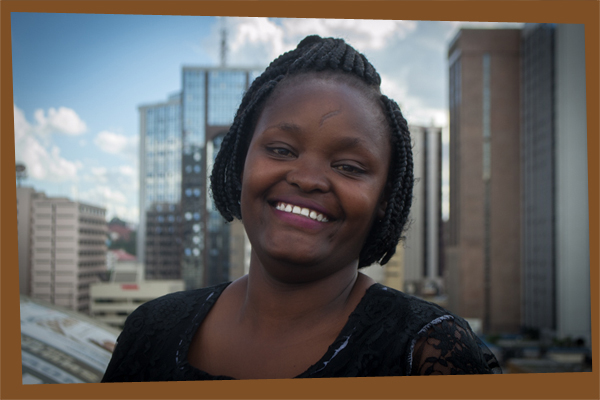
I was born in Mathare and it was not easy growing up here. At times we don’t have the necessities, the basic needs, like water and housing. My childhood was not so nice because sometimes in this village there is fighting between the landlord and tenants, so the landlord shuts your house and you have to sleep outside.
It is hard to be a woman in Mathare because the culture here is always about men and there are many violations committed against women and girls. Men are everything. When you are a girl child, it is always about the boy child. You will not be employed if your husband does not sign your work. If you are a single woman, there is no one to sign for you so you will not get employment.
I became a human rights defender because in my marriage, there was a lot of violence and battering. I came together with women in a similar situation under the Pan African Women group and we learnt about what being a human rights defender means. The Pan African Women group is a movement, we listened to each other. I decided to be a human rights defender to fight for other people’s rights before fighting for mine. Most people don’t know their human rights so we work with them. Whilst helping other people, my mind became so serious and I finally decided to move out of my house. It is better now because there is no violence and I can make decisions on my own.
I do this human rights work because of passion and my work covers the whole (Mathare) valley. This activism has impacted my life because I can now stand for my rights without fearing anyone or anything. As a human rights defender, the thing I enjoy most is when you successfully rescue a child and justice has been delivered. Sometimes, we don’t find justice, which is the hardest part because people who had faith is us become disappointed. And then, even we become disappointed.
My biggest fear as a human rights defender is that if I am hurt in my work, I cannot provide for my kids and I cannot pay rent. When I read about the toolkit, I felt like it is not just about being a human rights defender but it is all about being a woman human rights defender so I felt safe. By being a toolkit organiser, I hope to learn more and then to come back to my community and to educate them even more than I already have.
Jecinter Agunja
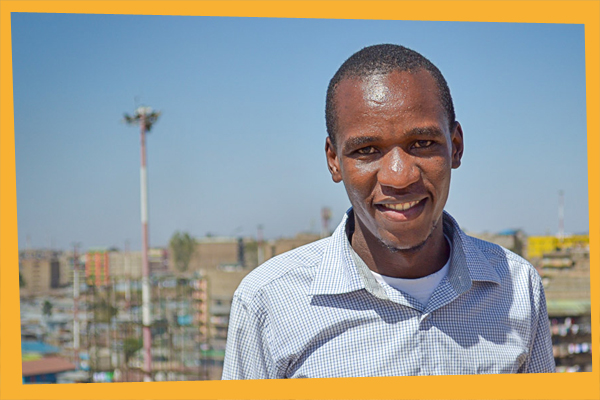
There is a lot of hardship growing up in Mathare, like in any other informal settlement. Reaching 30 years for a young man and not being dead is an achievement. Reaching the age of 25 for a young woman and not being pregnant or forced into early marriage is an achievement. We end up losing most of our people in Mathare. We survive with one or less parents.
Within the settlement there is poor housing, poor healthcare, poor education and poor parental guidance and there is also the influence of illegal brew and drug use. Hardship opens your eyes and your brain for you to make sure that now you can think because there’s a lot of economic hardship, police brutality and social brutality.
I became a women’s rights defender because when there is a misunderstanding in the family, the biggest casualties are women. For a long time they have never had people side with them. In Kenya, women are perceived as number two in the hierarchy of the family. The phrase ‘ladies first’ never applies in Mathare because social arrangements mean that they are supposed to be servants to men.
Women’s issues are marginalised and their rights are violated. I have been very supportive of the issue of women as a trainer and in solidarity. You cannot separate the struggles in the informal settlements so I have been very active in defending women’s rights defenders by giving them support and access to networks.
Being a woman in Mathare is difficult because there are types of insecurity where women are most at risk. It is unsafe to walk in many areas of Mathare at certain times of the day because of the high crime rate and high likelihood of rape. We did a demonstration in 2012 on the harassment of women and in return the state opened live fire and one of our sisters was shot in the back. All my colleagues and I were arrested and we were only two men. It really pushed me. Things like kidnappings, illegal arrests, criminalisation, trumped-up charges and threats happen on a daily basis. My family has to accept that this is the truth but my activism has caused my entire family to panic, so I have explained to them why we need a much more just society.
This community has never understood that activism is a calling. People in Mathare see that NGOs bring money to the village so they think activism comes with a budget. The community perception of human rights is that all these ‘wazungu’ (foreigners) are coming from all over the world to the slums. They don’t understand that activism is because of a passion, of a feeling. It is a challenge to say ‘I do this because I believe in it’ and that activism has a voluntary aspect.
I wanted to become a toolkit organiser because of the history of women’s oppression in Mathare and in other informal settlements. I find it rewarding to see that the number of women organisers in Mathare is growing. Women can take the lead. The state feels that they are inferior, but when women are in front we will be successful. My passion is to get more women, recruit them and put them in front.
Sakwa Francis
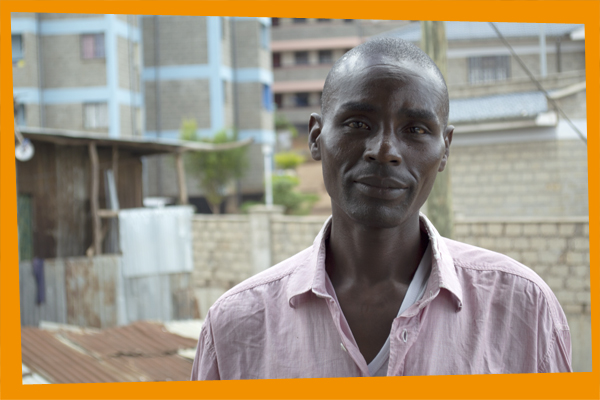
I grew up in Kisii, in the western part of Kenya. Life there is good but there are too many people and not enough resources; you can get plenty of food but there is not much work so it is difficult to pay for school fees and other expenses. I moved to Kibera when I was in my mid-twenties. My wife is still up country, she farms our land there, but I came to Nairobi to work; here there are lots of factories and opportunities to work. When I first arrived, I was doing engaged in some business activities but now I am a casual worker; I am trying to work hard so that my children can go to college. I am also a community volunteer.
I became involved in human rights’ work because I feel very bitter when somebody, when anybody, is abused. Since I was young, I have always felt that each one of us deserves to be treated as a human being and so I try to speak out when I see something wrong happening to someone. This work is difficult at times; people do not appreciate it when I interfere. When I know a wife is being abused, being beaten by her husband, and I get involved, her husband might think that I am having an affair with her. But my intention is not only to protect that particular woman but also to bring peace to that family. I inform them that everyone has rights and so he should not beat his wife or his children. Instead, they should be provided for.
My passion for human rights shapes the relationships I have with my own family. Even as a child, when my schoolmates were fighting, I never fought anyone, as I feel it is bad. I do not like to harm anyone and although my wife and I have small quarrels lasting a few minutes, we have never fought. I do not beat my children; I do not even pinch them. When they have done something wrong I use my words to convey this to them, never my hand. This has allowed me to have friendships with my children. When I go to their school, their friends say, “This must be your brother, not your father”, because of the way I behave with them.
Initially I was doing my human rights work myself, here in Kibera. In 2009, I joined some civil society groups including Gender Defenders. Through these groups, I have had the opportunity to do some training and, unlike when I worked alone and sometimes felt that I could not speak out because I was fearful of the consequences, we started to speak out together. The training has allowed me to understand how to prevent gender violence, how to look for signs of it and how to report gender violence cases. I know that if we work hard on gender violence cases we will reduce the number of these cases in the future.
My wife worried that my human rights work was putting me at risk. She used to say that the things I am involved in might bring me and my family problems later. Sometimes she would ask me to wait and see what happens with a situation, but I would tell her “If I wait something bad might happen, why can I not try to prevent something bad from happening?” There was a time when I was called to address my community members. When they introduced me, they said that I am someone who has been helping other people, advising them and trying to guide them. I think this helped my family understand my human rights work and now my family, even my father, respects what I do.
Doing human rights work here in Kibera is challenging. Sometimes, because of my human rights work, I am asked to go to an area where they do not know me late at night. In these situations, I have to be very careful because it raises suspicion if an unknown man is getting involved in what some people see as “family matters”. In the situations when I fear to enter, I will try to find a woman or community elder to accompany me. There have also been times when I have gone to a particular household and a woman has been abused and needs to go to hospital but there is no money for the vehicle to take her to hospital. What am I meant to do when I do not have the money either? These are just a few of the challenges facing human rights defenders in the settlements.
Despite the challenges, this work is very rewarding. When I travel around, I can see people saying, “This is somebody who tried to help so and so there”, or “This is somebody who will try and help you when you have a problem, just be open and tell him”. Therefore, I am happy that the community appreciates me. Through my role as a WHRD Toolkit Organiser, I like getting to work with different people, sharing new ideas and hearing how others work with the community so that I can get ideas for how I can continue to help my community.
Christopher Omoke
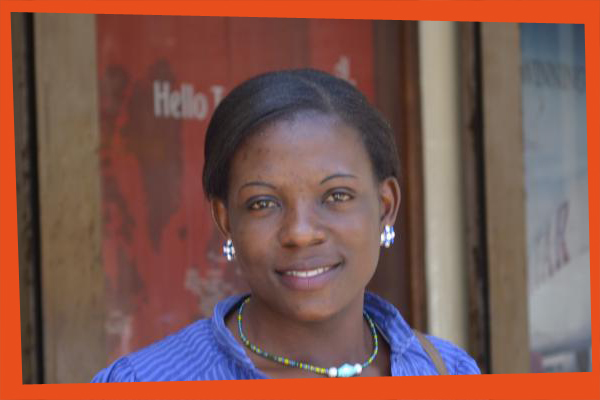
When I was young I used to have many friends in Mathare, we really enjoyed the life of the slums because we were a part of it. We were born there and it was our home. Living in Mathare, one is always surrounded by people; we school together, we shop together, we work together, we go to church together, we do everything together. Growing up, we were like a family there.
Life in Mathare is not always easy though, women in the slum face many challenges. Women face harassment and insecurity – the latest a woman can walk outside alone is 8pm because later than that she is at risk. I got involved in human rights work because of the issues that my fellow women face; I felt that I needed to do my best to defend these women.
Sometime back, my neighbour, a widow, had her house broken into by a gang and she was raped during the night. She screamed but there was nobody to assist her because everybody feared going out at night. She suffered a lot and I felt so sorry for her. I felt so powerless. I felt that I could not do anything to assist her or other women in my community. However, when I became a social worker, a community mobiliser and a community developer, I was inspired and felt able to support my fellow women. Now I document cases and take them to the police station; I feel like I am helping these women achieve justice.
Supporting human rights is difficult work and the major challenge that we face is lack of support from the authorities. Sometimes, when you report a case, it is not taken seriously and the case cannot progress. This is demoralising. On other occasions, we report cases but the criminal is someone with money and they use their money to get the case dropped. I was handling a case of child rape, where the girl was raped by a senior teacher, but the teacher threatened us and the police did not take the case seriously (perhaps they received a bribe) but we kept on following the case. My family worries about me when I work on cases like this one and receive threats; they are concerned that my human rights work puts me at risk. This case was painful because we really tried to help the girl receive justice but we felt like we were getting nowhere.
Being a social worker[1]. is something that I do passionately; I am assisting the poor and, having grown up in a slum myself, I feel the pain that others are undergoing. What I like most is taking on a new case, trying to solve it and succeeding. I work on peacebuilding, the fight for women’s rights and girl child initiatives, including visiting schools to talk with them. I find it rewarding if we succeed with a case and assist a woman who had not been receiving justice. At the end of the day, when a woman achieves justice, I am very happy.
Linet Adoyo Okoth
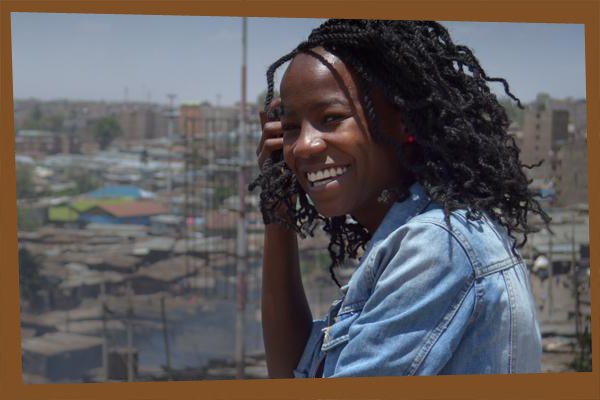
I come from a family of four daughters. My father was never really in the picture, but I never felt the absence of a father-figure in the house; Mama has been such a role model in that sense. She would say “whatever you want to do, you can do it”. Whenever we would complain about not having a brother to help us fix household things, she would push us to learn how to do it ourselves.
Growing up in Nairobi was both very challenging and frustrating because of the way women are treated here. My mother shielded us from much of the violence against women in our society but I began to notice these things slowly as I grew up. From that moment, I started to have a strong opinion and became very vocal on the issue of sexual and gender-based violence, though I came to realise that no one likes a militant woman [laughs]. Being called a “hooker” by the police because I am walking alone after 9pm in a neighbourhood like Westlands [an affluent neighbourhood in Nairobi] and having to beg them not to take you to jail and feeling nervousness in my heart for my safety when I am walking home at night are just some of many examples of how harassment affects your day-to-day activities. At times you just do not want to leave your house or take the matatu anymore because no matter how you look, how you dress or how you speak to people, women are targeted because they are women; this is such a normalised issue here that, at the end of the day, many cases of harassment go unreported. Girls and women of all ages have to learn how to protect themselves. In Mathare [one of Nairobi’s biggest urban settlements], for example, women old enough to be grandmothers are learning self-defence to protect themselves from rapists.
My passion to work in the human rights field was sparked when I was sent to study in a high school for underprivileged Maasai girls, in Kajiado County. That is when I realised how lucky I had been in life and how hard work can really pay off, regardless of one’s background. Back then, one of my sixteen-year-old classmates dropped out of school because she got pregnant but the other girls were not surprised at this. I then did some research on this issue, trying to find out how to help certain girls from certain communities and I befriended some people in Narok who were rescuing girls from early marriages and putting them in school.
When I joined Law School in 2010, I got to read and understand every single aspect of the Constitution and basic human rights. Then, during my second year of College, while as I was carrying out an internship in an organisation that deals with community sanitation and hygiene, I went to Mathare for the first time. As you go deeper into the settlement, you see the vast disparity between Mathare and other parts of Nairobi. The more time I spent in Mathare, the more I realised that everyone ought to have the same rights and the same opportunities as people elsewhere in Nairobi. If you look beyond the stereotype of Mathare as being a “collection of slums” or “one of the oldest slums in Africa”, you see a vibrant community of people who are just looking to make a living. Of course, some things need to change, but there is nothing wrong with being from Mathare[1].
After Law school, I decided I wanted to use my skills for people who cannot defend or protect themselves. That is when I came across Nonviolent Peace Force (NP), an international organisation that works on civilian protection. I made the leap and spent a year in the Philippines working for this organisation because I was eager to see in practice how civilians can receive effective training in order to protect themselves. What I loved most about working for NP was its principles of non-violence and non-partisanship, and the fact that the local partners are considered the most important people pushing for change. One of my motivating factors as a human rights defender is interacting with the communities and helping them to come up with ways that they can change situations or advocate for their rights and needs.
I wish that women human rights defenders, as well as the issues we fight for were better acknowledged. There are so many people, women and men, who are doing their best to protect girls and women in their communities whom we never hear about. Being a woman human rights defender can be demotivating at times; I sometimes feel that nothing will ever change and I ask myself: “Who am I helping? How is this helping?” However, I can definitely say that being part of this group of Toolkit Organisers has been a wonderful experience so far because I get to share, work and network with like-minded and inspiring human beings with strong voices, who never back down regardless of the numerous obstacles that come their way.
Maria Mutauta
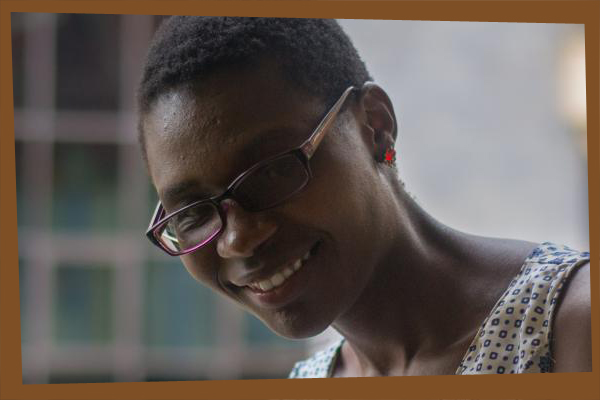
I was born in Kibera and I grew up in Kibera. Being in the informal settlement, I can confess that it is not an easy journey. You are born into a very tough environment; an environment with unsuitable shelter, no access to clean water, it is a challenge. Furthermore, there is a violence of all forms; robbery with violence, gender-based violence and many other forms of violence. We grew up with gender-based violence, thinking this is a normal thing because you can see it; you can witness it in the daytime and at night. It happens in houses and it happens on the journey to school. You have to walk a really long distance to access the public school, without your parents accompanying you and showing you the way as they have to leave for work early.
I am a single mother, with a two-year-old child. I am a paralegal in women’s and children’s rights. I have a certificate in social law and counselling, a diploma in social work and qualification in sustainable human development. Throughout my life, I have been working in the community. I started working in a church and this is where I got to fully understand the scale of the issues facing women living in the slum. That is when I realised that there is much more we need to do. There are issues with poverty, chronic diseases, gender-based violence, and issues with women just struggling to attain and keep hold of their rights. Most of the women in Kibera work as casual workers without job security. They often have children to look after. They face issues around housing; ‘landlords’ do not understand rights, and some people are evicted in unclear circumstances. In Kibera, people do not own pieces of land, but there are structures, so everyone in the community needs to communicate about who has which structure and respect this ownership.
I give advice when I see things are not going the right way for someone, for example if the person has legal or social issues. I try to ensure that everybody’s rights have been protected in each family. When I see a woman feeling empowered and speaking out, I realise that the crime against that woman should not have happened in the first place. A man should not do this to women or to their children. When people realise that there is a legal process that can be followed, for a child, for a woman, for a man, to get justice, that, for me, is rewarding.
I face many challenges in my work. It takes too long to find justice for women. A woman comes to you saying she was evicted, you push this case, you engage lawyers, but sometimes the lawyers are not following the cases to the end. It is disappointing. On top of that, the cost of hiring a lawyer is really high. The community sees me as a saviour, but they do not realise that as a paralegal I cannot go to court, I can only advise them.
Once I was handling a case of a primary school girl and in fact, I gave the girl shelter in my house for three months. I started to receive threats, “if you don’t let that girl go, then you will see end results”. I realised that even if I make this girl leave my house, it was not safe for me to continue staying in this house, so I had to move. When I realised my life was in danger I had to surrender everything; it was very sad I could not continue to help the girl.
There is so much we can do in the community. There are issues of women and legal empowerment, social empowerment, family development and child rights. Women’s and children’s rights should be the key agenda for us in the community. I am adding my existing knowledge and experience to my role as a Toolkit Organiser. We, the Toolkit Organisers, have ideas and capacities; we only need the platform. The WHRD Toolkit can provide that platform.
Judith Adhiambo Ochieng